
Older dogs • Price and usable protection

What insurance can cost for an older dog

An age-eligible quote is only part of the cost question. Medical history, selected benefits and future renewal prices change what the premium buys.

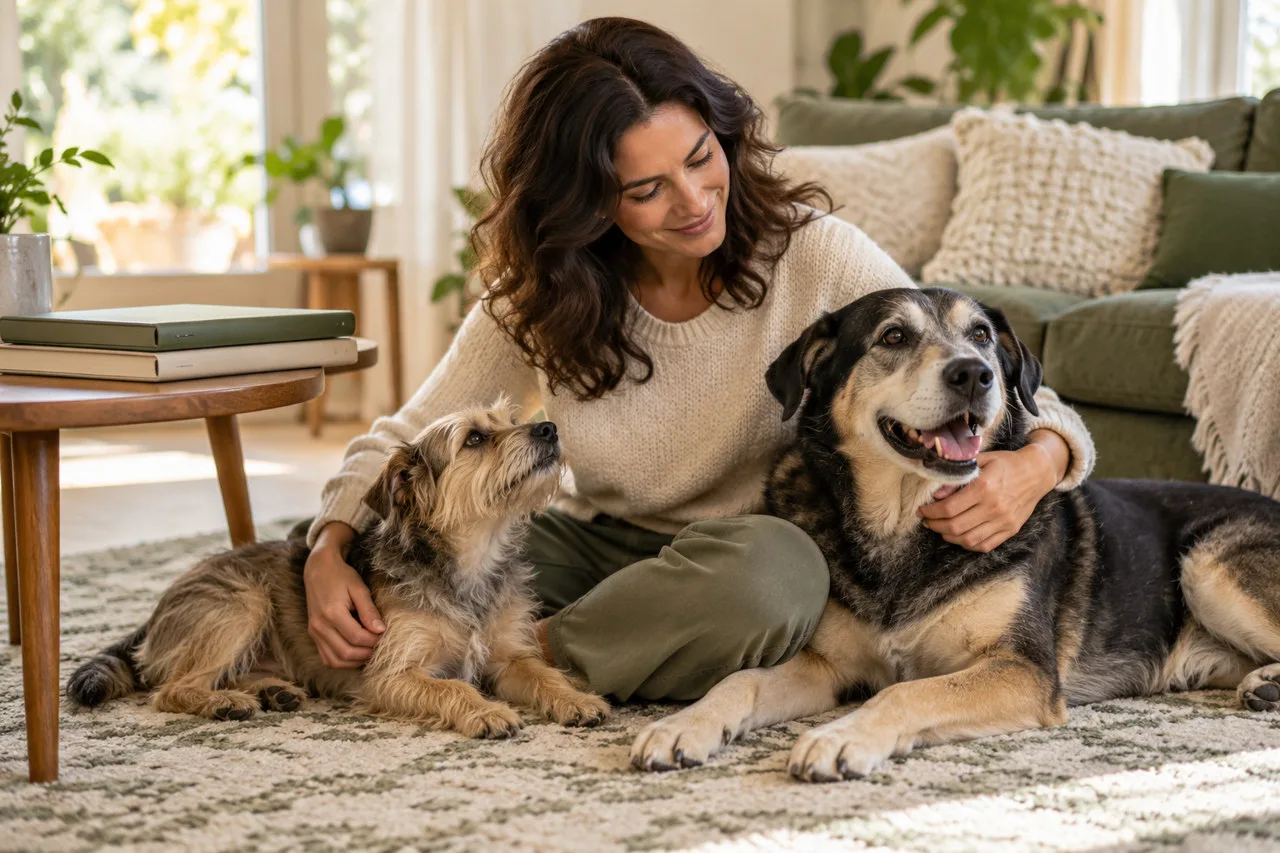
Owner sitting at home beside two dogs, one with a gray muzzle
✓ Policy-first ✓ Independent ✓ Useful checks
Direct answer
Insurance for an older dog has no single reliable price: age, breed, residence and selected protection affect the quote, and medical-history exclusions can reduce its usefulness. First establish whether the new offer includes illnesses at your dog’s age. Then add the premium to care you already know you must fund, while keeping a separate reserve for uncertain expenses. A low injury-only quote is not a senior accident-and-illness benchmark.
Cost & value

Price the right age-eligible product

Official product example What the age statement means What the cost comparison must still establish
Pets Best Its FAQ states no upper enrollment-age limit. The actual premium, medical-history exclusions and selected benefits for this dog.
Embrace new enrollment Its dog page distinguishes accident-and-illness entry below age 15 from accident-only entry at 15 or older. Whether the offered scope matches the reason you wanted insurance. Existing policy continuation is a different question.

These are current product descriptions, not quotes or a complete senior market list. Ask the insurer for its current state-specific answer at the dog’s exact age. Do not average an injury-only offer together with a broader illness policy and call the result a typical senior price.

Age acceptance also does not remove exclusions. A policy can accept the dog while declining expenses connected with an earlier symptom or diagnosis. That distinction changes the value of the premium more than a small difference between two monthly charges.
Quotes

Medical history changes the expense left outside the quote

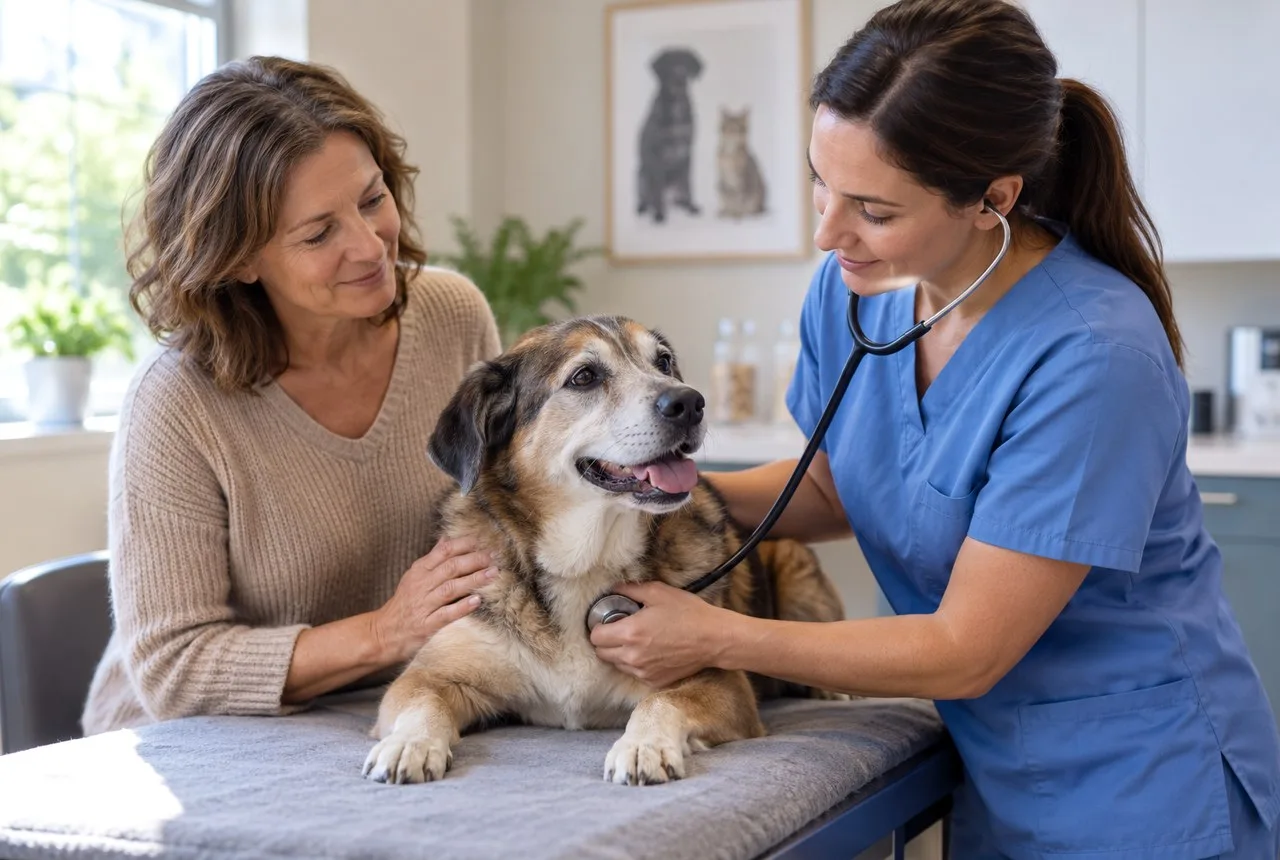
Veterinary professional examining a small gray dog beside an owner
The photograph illustrates a care discussion; it does not establish this dog’s age or diagnosis.

Start with the care already on the calendar: prescriptions, monitoring, dental work or other treatment your veterinarian has discussed. Ask which of those expenses the proposed insurance would exclude. Until the answer is clear, keep the expense in the amount you must be able to fund.

Embrace offers a medical-history review that owners may request after buying the policy. It is not automatic and is not a pre-purchase clearance. The review needs detailed veterinary records, including the relevant waiting-period interval, and cannot conclude until the needed records arrive. Ask about the review process and applicable cancellation terms before relying on the result.

A quoted premium and an uncertain exclusion should remain two separate entries in your notes. If the insurer cannot answer a case-specific question before purchase, do not convert that uncertainty into a promise. The comparison can still identify future unrelated risks, but it cannot make known treatment suddenly insurable.

What to know

Build the annual baseline without inventing a senior average

Use three headings: the policy’s recurring price, care you already expect to pay directly, and uncertain future care. Only the first two can form a reasonably concrete starting baseline. Do not fill the third with a guessed “average claim” and present the total as an expected outcome.

Fictional example: an offered premium of $1,080 for the year plus $720 of known care gives a $1,800 baseline before any unexpected bills. If a narrower offer costs $660 but still leaves the same known care outside coverage, the baseline becomes $1,380. The $420 reduction is real in the illustration, but it buys less protection; it is not $420 of unconditional medical savings.

Keep accessible treatment money separate from that baseline. A reimbursement policy may require you to advance the hospital’s full charge even when part is later paid back. Money set aside for the premium cannot simultaneously count as available emergency cash.

Quotes

Show a renewal sensitivity, not a rate prediction

The current annual quote does not establish the price for the rest of the dog’s life. Ask what can affect renewal, how you will be notified and whether the policy’s benefits or options could change. A statement that coverage may continue is not a fixed-price guarantee.

For planning only, use more than one possible future premium. On the fictional $1,080 first-year premium, an unchanged second year would produce $2,160 over two years. A hypothetical 20% second-year increase would instead produce $2,376. The 20% is an invented stress test, not a forecast or a typical senior increase.

If either scenario is unaffordable, revisit the chosen benefits and funding plan before assuming you can simply change insurers later. A replacement can assess the history acquired under the old policy. Keep an existing contract until you understand the consequences of any replacement and its effective dates.

Cost & value

A lower-cost fallback needs a written illness gap

Accident-only insurance may be worth considering when that is the protection the owner deliberately wants or can obtain. But it should not be described as a cheaper version with all the same medical benefits. Embrace’s current accident-only materials exclude illnesses and certain orthopedic conditions, including CCL tears. “Sudden” is not enough to establish an insured accident.

Write the gap beside the premium: which risks remain covered, which known care is self-funded and which future illnesses would also be self-funded. If you cannot explain that difference, the offers are not ready to compare.

The final cost answer is an actual offer, an honest baseline and a sustainable plan for what the insurer may not pay. Discuss necessary care with the veterinary team regardless of the insurance decision; do not postpone treatment while hoping a new policy will cover an existing concern.

Evidence

Sources and policy context

These public references support the consumer or veterinary context. Named insurer details were checked in official product materials; the policy offered for your pet and state determines the actual terms.

Next step

Compare Current Pet Insurance Rates

Check current options for your pet and location, then compare the policy details, exclusions, costs, and eligibility before choosing.

Compare the policy before you choose Check the actual offer, exclusions and out-of-pocket terms.
See Rate Options